|
||||||||||||||||||||||||||||||||||||||||||||||||||||||||||||||||||||
|
||||||||||||||||||||||||||||||||||||||||||||||||||||||||||||||||||||
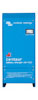
Skylla TG Chargers 24 / 48 Volt
|
Battery Chargers and Auto Transformers
One full rated output and one 4 Amp output.
Charge voltage can be precisely adjusted to suit any battery system. The input for the charger is 230V at 50/60HZ. Charge voltage can be measured directly on the battery terminals in order to compensate for voltage loss due to cable resistance. An external sensor allows to measure battery temperature and compensate charge voltage accordingly.
|
|---|---|
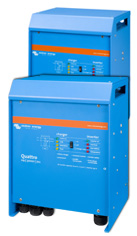
Centaur Charger 12 / 24 Volt
|
The new Centaur range of battery chargers from Victron Energy have
been designed to be a true world-wide product. Universal compliance
and input/output specifications are cornerstone characteristics
of the new range from the established Dutch manufacturer.
|
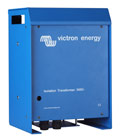
Autotransformer 120/240VAC-32A |
|
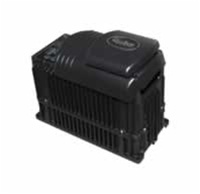
About Inverters An
inverter is a device which changes DC power stored in a battery to
standard 120/240 VAC electricity (also referred to as 110/220). Most
solar power systems generate DC current which is stored in batteries.
Nearly all lighting, appliances, motors, etc., are designed to use
ac power, so it takes an inverter to make the switch from battery-stored
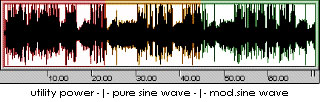
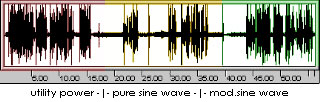
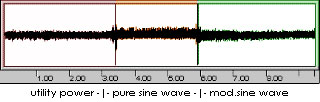
DC to standard power (120 VAC, 60 Hz). Synchronous Inverters (grid-tie) Synchronous inverters change DC power into AC power to be fed into the utility grid. A power system with this type of inverter uses the utility company as a storage battery. When the sun is shining, your electricity comes from the PV array, via the inverter. If the PV array is making more power than you are using, the excess is sold to the utility power company through a second electric meter. If you use more power than the PV array can supply, the utility makes up the difference. This type of system makes the most sense if you have utility power, because there are no batteries to maintain or replace, but it has a very long payback period and may not be cost-effective at today's electric rates. Using a multifunction inverter allows you to sell excess power to the utility, and also maintain a battery bank for standby power in the event of a utility power failure. Multifunction Inverters Some true sine wave inverters can operate as Stand-Alone inverters and as Synchronous inverters at the same time! In a typical installation, this type inverter is connected to a battery bank, the utility power lines, a standby generator and the house load center. When batteries are in a charged condition, the inverter supplies AC power to the house from the batteries. If the batteries become discharged, the inverter supplies the house loads from the utility lines, while charging the batteries. If the batteries become fully charged by another power source, such as photovoltaic modules or a wind or hydroelectric generator, excess power may be sold back to the utility. If utility power fails, the inverter can still operate, supplying critical loads. If a standby generator is started, it can also supply power to loads. The inverter will synchronize to the generator and allow loads to be powered that are too large for either the generator or inverter to supply alone. Utility Protective Features Grid-tie inverters include the following protective systems. These are used to protect the inverter and the installer, operator, and utility line-person from hazardous conditions including dangerous feedback into the power grid during an outage. If you are not a utility engineer you may want to skip this technical section. Grid Shorted - Normally, when the utility power fails, the inverter momentarily tries to power the entire neighborhood. This condition looks like a short circuit to the inverter and causes it to reach the overcurrent protection setting and shuts off. It then opens its internal relay and disconnects from the utility grid. This protective system operates instantly. Grid Open - The inverter can tell when there is no current being delivered to the grid and it will disconnect. This is used when a power line disconnect switch is opened or the power line which feeds the installation is cut. This protective system operates instantly. Islanding - This occurs when the grid has failed and the "neighborhood" that the inverter is powering requires a power level that the inverter can supply. This condition is often called "islanding". The islanding detection circuit checks grid condition on each cycle. The inverter watches the utility grid and waits for it to rise a couple of volts before it begins to invert again. This is done on each cycle when SELL mode is activated. Typically, disconnect is achieved in a few cycles after the utility has failed. If a large electric motor is connected, it may provide enough generator capacity that the inverter thinks the grid is still connected. This can fool the protective system. Two additional protective systems are provided to then handle this condition, over/under frequency and over/under voltage detection. Over/Under Frequency - Since the inverter is locked onto the frequency of the utility grid, the frequency of the islanding system will drift out of regulation in a short amount of time during an islanding condition. This protective system my require a couple of seconds to respond. The settings are 58.5 and 61.5 Hertz for 60 Hertz models (48.5 and 51.5 Hertz for 50 Hertz models) and are not adjustable. Over/Under Voltage - Since the inverter does not try to regulate the voltage of the utility grid while selling power into it, the AC voltage will drift out of regulation in a short amount of time during an islanding condition. This protective system may require a couple seconds to respond. The default settings are 108 VAC as the lower limit and 132 VAC as the upper limit. These settings are not adjustable on the "PV" versions but are reset to the factory default values the next day. For systems with batteries, the values are fully adjustable. Stand-Alone Inverters Stand-Alone inverters convert DC power stored in batteries to AC power that can be used as needed. Selecting an inverter for your power system based on the maximum load you will be powering, the maximum surge required, output voltage required, input battery voltage and optional features needed. High quality stand-alone inverters are available in sizes from 100 watts, for powering notebook computers and fax machines from your car, to 11,000 watts, for powering an entire house or small commercial operation. The size of an inverter is measured by its maximum continuous output in watts. This rating must be larger than the total wattage of all of the AC loads you plan to run at one time. The size of the inverter can be minimized if the number and size of the AC loads is kept under control. Wattage of most AC loads can be determined from a tag or label on the appliance, usually located near where the power cord enters, or from the owner's manual. If the inverter is expected to run induction motors, like the ones found in automatic washers, dryers, dishwashers and large power tools, it must be designed with surge capability to deliver power many times its rating for short periods of time while these motors start. Stand-alone inverters are available with three basic power output waveforms : square wave, modified square wave (sometimes called modified sine wave) and pure true sine wave. Synchronous Inverters and utility companies normally deliver a pure sine wave. Square wave inverters have the lowest cost and efficiency but are not sold by NoOutage.com. The price of the better quality inverters is low enough to make square wave inverters an unattractive choice. Most low-cost inverters have modified square wave output (sometimes called modified sine wave) with harmonic distortion of around 40%. They are an economical choice in power systems where waveform is not critical. Their high surge capacity allows them to start large motors while their high efficiency makes them economical when running small loads like a stereo or a small light. They can power most lighting, televisions, appliances and computers very well. We do not recommend them for computer systems with laser printers. Unfortunately, this type of inverter may destroy some low cost rechargeable tools and flashlights, and their waveform will not allow many laser printers, copiers, light dimmers and some variable speed tools to operate. Some audio equipment will have a background buzz that may be annoying to music connoisseurs. Due to the wave form and high harmonic distortion some motors will consume more power on a modified square wave. The result is more noise, heat and losses. This is not usually a problem if this type of wave form is only being used for brief and infrequent backup power. However, for continuous year-around use, a motor running hotter will have a shortened expected life. You may even hear a distinct hum when running on modified sine wave power. For actual audio samples of motors running on utility power (wall outlet) versus pure true sine wave and modified sine wave inverter power click the sound images below. We used the S-1500 inverter to provide the pure sine wave to power these loads for this test. Note that to hear the best reproduction of the high frequency hum caused by the modified sine wave you will need to listen to the 44kHz recordings in the right column. |
||||||
|---|---|---|---|---|---|---|---|
|